

Every summer, bright orange flowers appear along the roadsides of Pumpkintown.
They line fence rows, fill roadside ditches, and bloom in patches beside winding country roads leading toward Table Rock and Sassafras Mountain. Most people know them simply as daylilies or “ditch lilies,” but few realize these flowers may be connected to the area’s history.
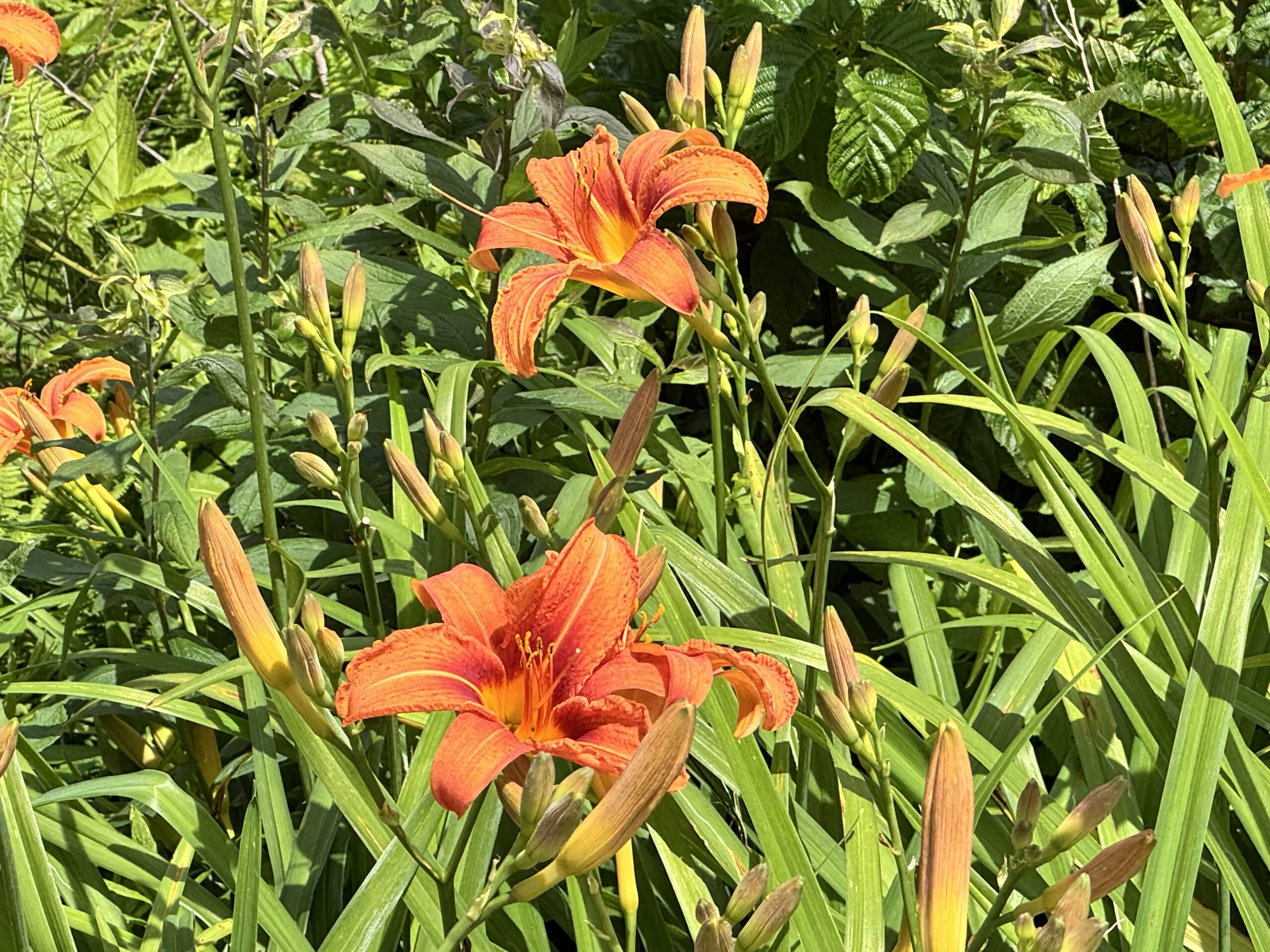
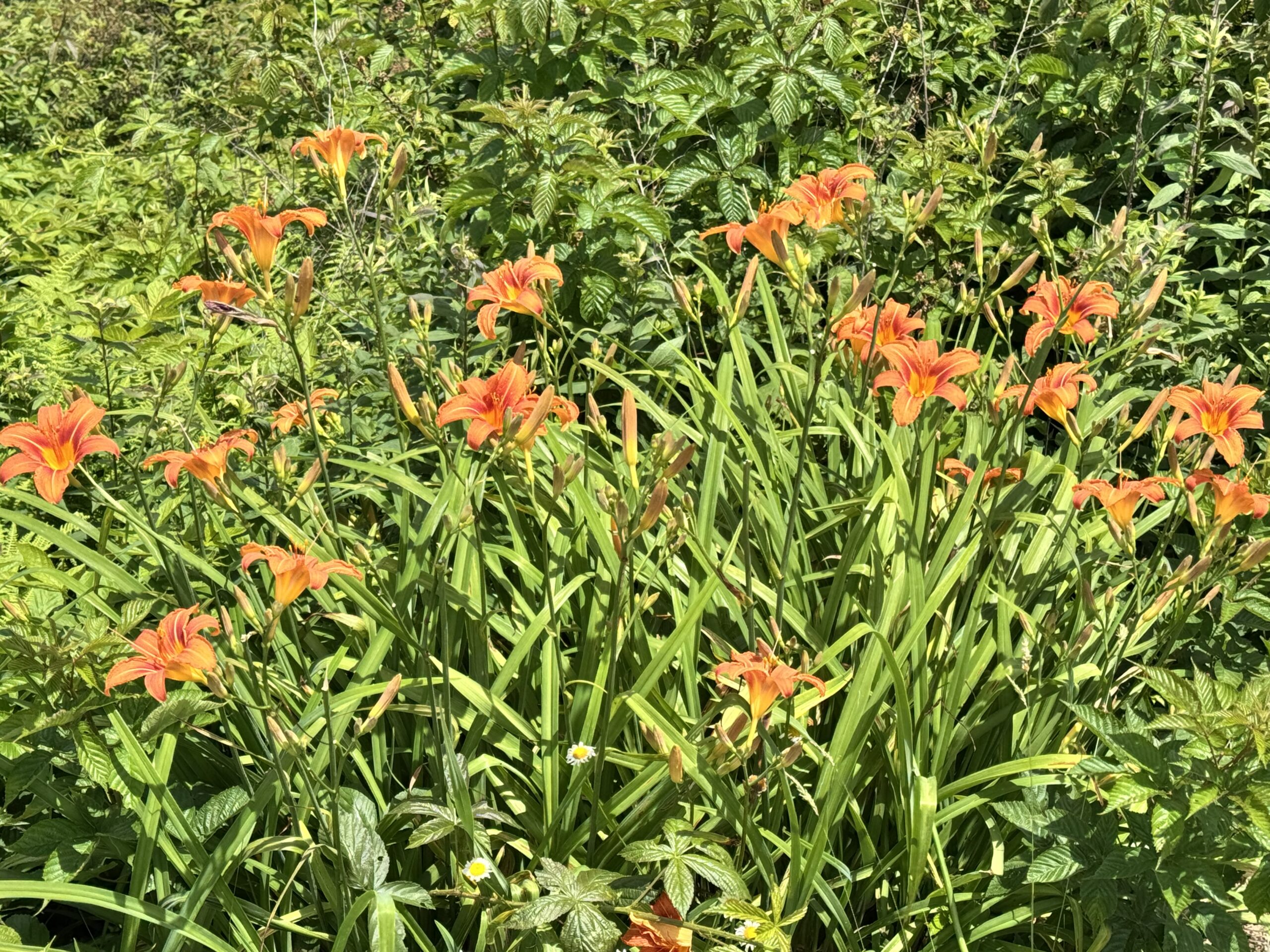
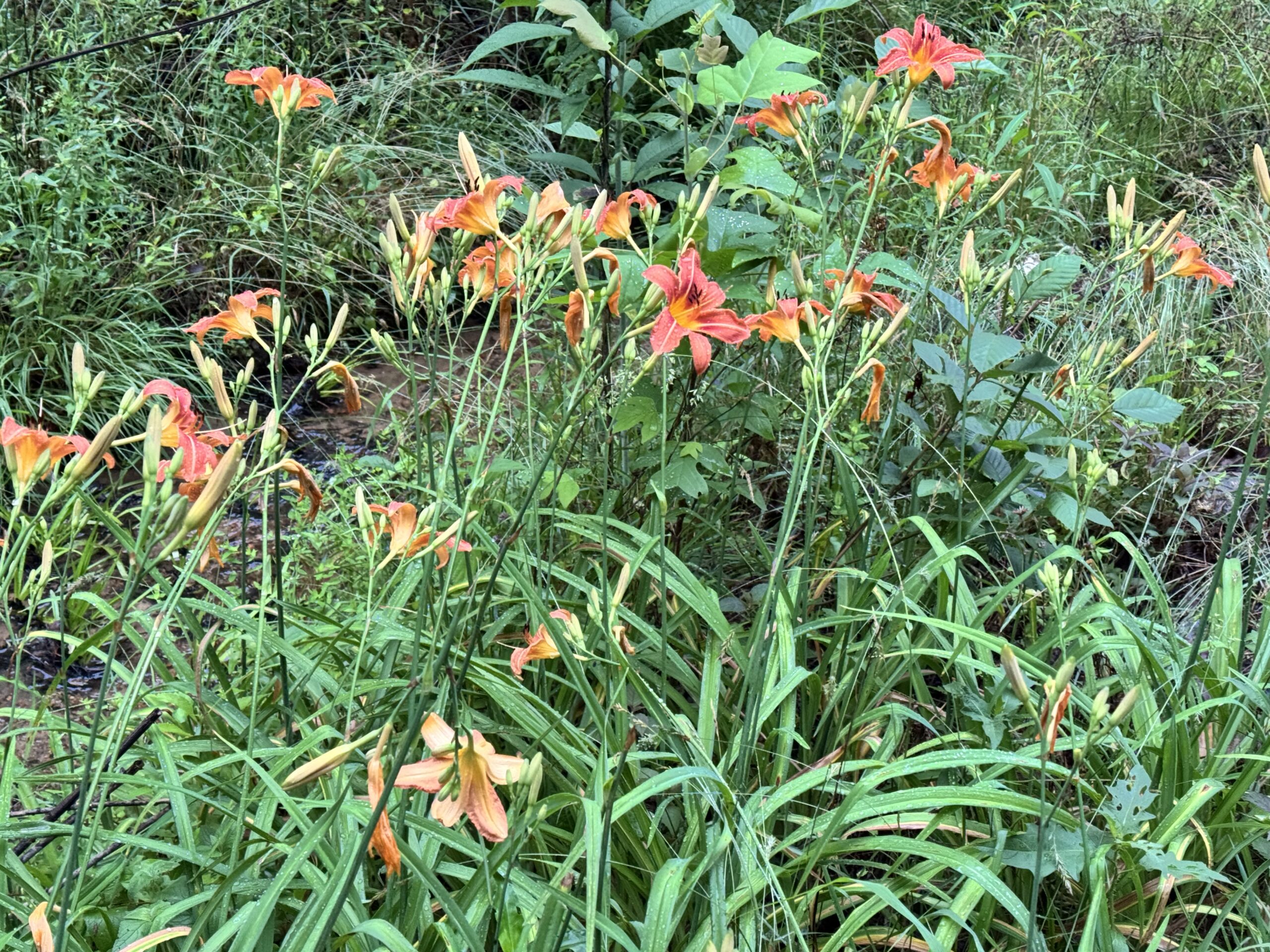
The orange daylily (Hemerocallis fulva) is not native to South Carolina. Early settlers brought the plant from Asia because it was beautiful, hardy, and easy to grow. Families planted daylilies around homes, wells, gardens, churches, and cemeteries throughout the foothills.
Over time, many of those places disappeared.
Old farmhouses collapsed. Families moved away. Fields returned to forest. Rural schools closed. Dirt roads were rerouted or paved over.
The daylilies remained.
Because they spread through underground roots called rhizomes, a single planting can survive for generations. Long after a house has vanished and the foundation has been swallowed by the woods, the flowers often continue blooming each summer as if nothing has changed.
Local historians and longtime residents have often used patches of old flowers as clues when searching for former homesites. Daylilies, daffodils, iris, and other heirloom plants can sometimes reveal where a family once lived even when no visible structure remains.
In a community like Pumpkintown, where generations of families have farmed the same valleys and hillsides, these flowers may represent living pieces of local history.
Many of the roadside patches seen today likely originated from homes that stood decades ago. Some may have spread from farmsteads dating back to the late 1800s or early 1900s. Others may have escaped from gardens and gradually expanded along creeks, fields, and roadways.
Whatever their origin, the flowers have become part of the landscape.
For many residents, the appearance of orange daylilies signals the beginning of summer in the foothills. They bloom as gardens begin producing vegetables, children start summer break, and visitors head toward Table Rock State Park, Lake Jocassee, and the mountain backroads of northern Pickens County.
The next time you notice a splash of orange along a quiet country road, take a moment to look beyond the flowers themselves.
You may be seeing one of the last surviving reminders of a home, a family, or a chapter of Pumpkintown’s history that would otherwise be forgotten.

Did You Know?
• Orange daylilies are often called “ditch lilies” because they commonly grow along roadsides and drainage ditches.
• Unlike true lilies, each bloom typically lasts only a single day.
• Daylilies spread through underground roots and can survive for decades with little or no care.
• Old patches of daylilies sometimes help historians identify former homesites and abandoned communities.
• Their bright orange blooms have become one of the unofficial signs that summer has arrived in Pumpkintown.


