

Few sights say “summer in the Upstate” quite like the gentle glow of lightning bugs dancing through the trees. Whether you’re sitting on the porch, walking a quiet trail, or remembering childhood evenings spent chasing them with a mason jar, these tiny glowing insects have a way of bringing out the kid in all of us.
As dusk settles over the forests and fields of the Upstate, the first tiny flashes begin to appear. One light blinks. Then another. Soon, dozens—or sometimes hundreds—of glowing insects drift through the darkness, turning an ordinary summer evening into something magical.
Most of us simply call them lightning bugs.
For generations, children have raced across backyards trying to catch them, while adults pause for a moment to enjoy one of nature’s most beautiful light shows. But behind those tiny glowing lanterns is a fascinating story of chemistry, communication, and conservation.
Here’s everything you ever wanted to know about one of South Carolina’s most beloved summer visitors.
They’re Actually Beetles, Not Bugs
Despite their name, lightning bugs aren’t true bugs at all.
They are beetles belonging to the family Lampyridae, a family that contains more than 2,000 species worldwide. North America is home to more than 150 species, with dozens living throughout South Carolina and the Southeast.
While adults are the stage we recognize, they spend only a small fraction of their lives flying through the night.
Firefly or Lightning Bug?
They’re exactly the same insect.
The difference is simply regional.
People throughout much of the South—including South Carolina—usually call them lightning bugs.
In other parts of the country, especially the Northeast and West Coast, they’re more commonly known as fireflies.
Scientists use both names interchangeably.
Nature’s Most Efficient Light Bulb
The glow of a lightning bug isn’t just beautiful—it’s one of the most efficient forms of light known.
Unlike an incandescent light bulb, which loses most of its energy as heat, a lightning bug creates what’s known as cold light.
Inside the insect’s abdomen, a chemical called luciferin reacts with oxygen in the presence of an enzyme called luciferase. The result is light with almost no wasted heat.
Scientists estimate that more than 95% of the energy is emitted as visible light, making lightning bugs among nature’s most efficient light producers.
Every Flash Is a Conversation
Those flashes aren’t random.
Every species has its own unique flashing pattern.
Some blink every few seconds.
Others produce rapid double flashes.
Some even create a graceful J-shaped flash as they fly.
The flashes are actually a language.
Typically, the male flies through the woods flashing a pattern unique to his species.
A female waits quietly on a leaf, blade of grass, or the forest floor.
If she likes what she sees…
She flashes back.
The male follows her signal until he finds her.
Every summer evening is filled with thousands of tiny glowing conversations.
Some Females Are Surprisingly Devious
Not every flashing female is looking for love.
Some species in the genus Photuris imitate the flash patterns of other lightning bugs.
When an unsuspecting male arrives expecting a mate…
He’s eaten.
Scientists affectionately refer to these species as the “femme fatale” fireflies.
Nature can be surprisingly dramatic.
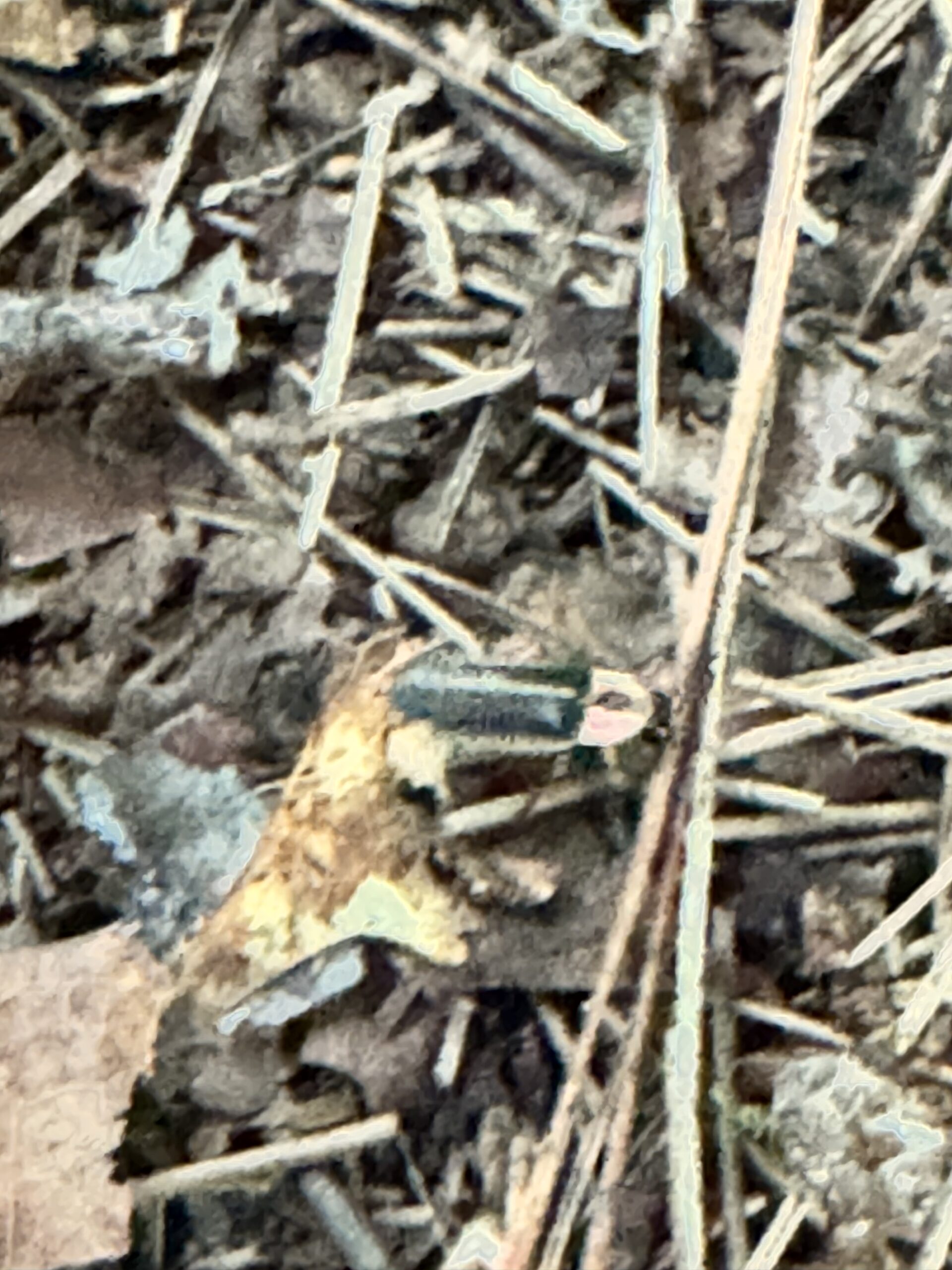
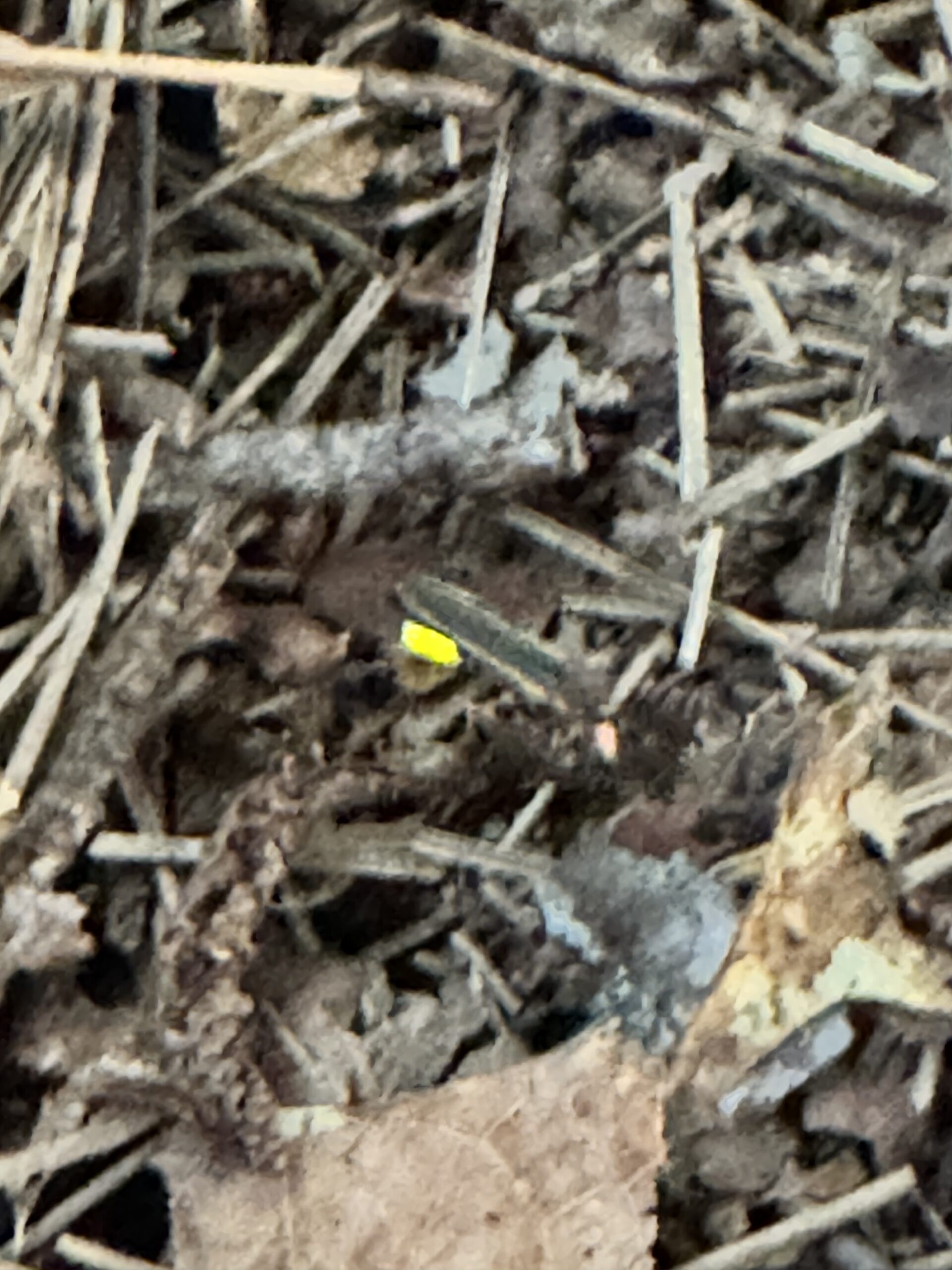
Most of Their Lives Are Spent Underground
Adult lightning bugs only live for a few weeks.
The rest of their lives—often one to two years—are spent hidden beneath leaves and soil as larvae.
These larvae are active hunters, feeding on:
- Slugs
- Snails
- Worms
- Soft-bodied insects
They inject digestive enzymes into their prey before feeding, making them valuable predators that naturally help control garden pests.
Why They Love the Upstate
The forests of Upstate South Carolina provide nearly perfect habitat.
Lightning bugs thrive in places with:
- Moist soil
- Leaf litter
- Fallen logs
- Woodland edges
- Meadows
- Creek bottoms
- Tall grasses
The rich forests surrounding Pumpkintown, Table Rock, Jones Gap, Caesars Head, Jocassee, and countless neighborhood woodlots offer ideal conditions.
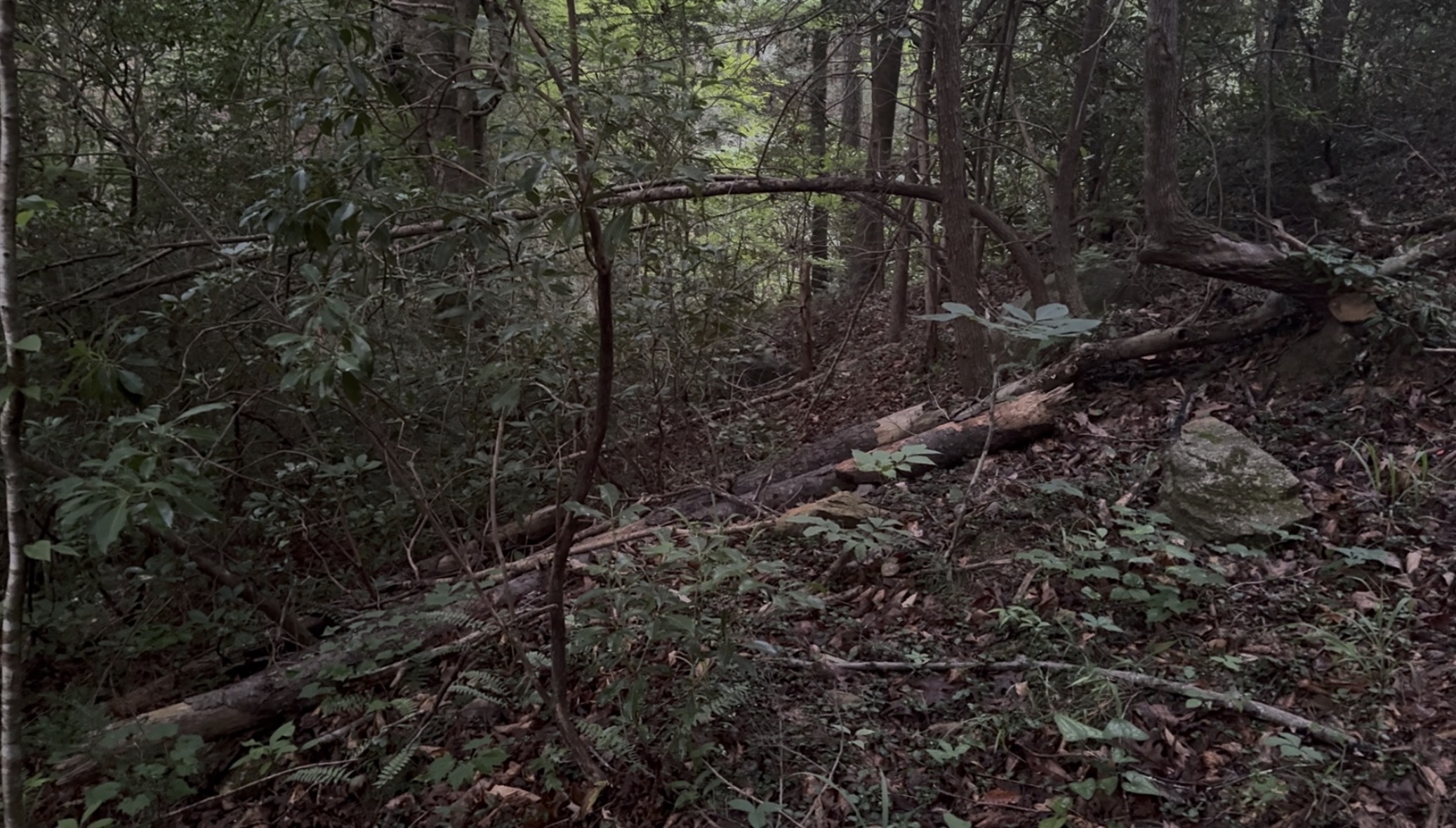
That last photo above? It’s almost a perfect example of a lightning bug habitat. Fallen logs, damp leaf litter, a shady forest canopy, and a nearby drainage create exactly the kind of environment where their larvae spend years growing before emerging to light up summer nights.
Why They Seem Less Common Than They Used to Be
Ask almost anyone over forty, and you’ll hear the same thing:
“There were so many more lightning bugs when I was a kid.”
Scientists believe that’s probably true.
Several factors are contributing to declining populations.
Too Much Light
Lightning bugs communicate using flashes.
Bright porch lights, streetlights, floodlights, and landscape lighting make it difficult for males and females to find each other.
Habitat Loss
Many yards are now heavily landscaped, leaving little leaf litter or natural woodland where larvae can develop.
Pesticides
Broad-spectrum insecticides kill beneficial insects along with unwanted pests.
Drier Summers
Lightning bug larvae require moist soil.
Extended droughts can reduce their survival.
How You Can Help
Fortunately, helping lightning bugs is surprisingly easy.
You can make your yard friendlier by:
- Leaving leaves beneath trees instead of removing every last one.
- Turning off unnecessary outdoor lights after dark.
- Avoiding unnecessary insecticide use.
- Planting native wildflowers and grasses.
- Leaving a fallen log or brush pile in a quiet corner.
- Allowing part of the yard to stay a little wild.
Sometimes the best thing we can do for wildlife is simply leave nature alone.
Are Lightning Bugs Dangerous?
Not at all.
Lightning bugs are completely harmless to people.
They don’t sting.
They don’t suck blood.
They don’t chase people.
Their primary defense is something called reflex bleeding. If threatened, they can release tiny droplets containing bitter chemicals that make predators think twice before eating them.
Birds quickly learn that glowing insects aren’t very tasty.
One important note: while harmless to people, lightning bugs can be toxic if eaten by some pets and reptiles, so it’s best not to let curious animals snack on them.
Childhood Memories in a Mason Jar
For many of us, lightning bugs are woven into childhood memories.
Warm evenings.
Bare feet in the grass.
A mason jar with holes punched in the lid.
Running across the yard trying to catch one more glowing light.
Fortunately, catching a few lightning bugs for a few minutes was never the reason their numbers declined. The biggest challenges they face today are habitat loss, excessive lighting, and pesticide use—not curious children enjoying a summer tradition.
If you do catch one today, enjoy it briefly, then let it go so it can continue its search for a mate.
A Rare Natural Wonder Just a Few Hours Away
One of the world’s most spectacular insect displays happens only a few hours from the Upstate.
Each year, thousands of synchronous fireflies gather in the mountains of the Great Smoky Mountains National Park.
Instead of flashing randomly, entire hillsides blink in perfect unison.
It’s one of the most remarkable natural light shows in North America and draws visitors from around the world.
Fun Facts
- Lightning bugs are beetles, not true bugs.
- There are more than 2,000 species worldwide.
- Some species don’t glow as adults.
- Eggs and larvae of certain species glow faintly.
- Their light is among the most energy-efficient forms of illumination known.
- Larvae spend much longer underground than adults spend flying.
- Every species has its own unique flash pattern.
- Scientists are studying lightning bug chemistry for potential medical and scientific applications.
Where to See Lightning Bugs in the Upstate
Your best chance is on warm, humid evenings from late May through July, especially just after sunset.
Excellent places include:
- Table Rock State Park
- Jones Gap State Park
- Caesars Head State Park
- Oconee State Park
- Lake Jocassee
- Mountain Rest
- Rural roads around Pumpkintown
- Wooded backyards with healthy leaf litter
The darker the sky and the more natural the habitat, the better your chances of witnessing an unforgettable display.
A Little Bit of Summer Magic
There aren’t many things that instantly transport us back to childhood quite like the first lightning bug of the season.
For a few weeks each summer, these remarkable little beetles remind us to slow down, step outside, and look closely at the natural world. Their tiny flashes are more than just beautiful—they’re messages that have echoed through forests for millions of years.
The next time you see a lightning bug drifting through the dusk, take a moment to appreciate the incredible journey behind that tiny glow. Somewhere beneath the leaves, the next generation is already growing, waiting for another South Carolina summer to light up the woods once again.


