
Camping at Table Rock State Park: Everything You Need to Know Before You Go
SLEEP UNDER THE TREES • TABLE ROCK, SOUTH CAROLINA
Make room for a mountain morning.
A good Table Rock camping trip begins with the right campsite, a manageable plan, and enough time to enjoy the park between outings. Choose your setup carefully, then let breakfast outside become part of the destination.
Camping at Table Rock State Park gives you a base for mountain trails, lake time, and exploring the foothills around Pumpkintown. But the experience depends on your reservation: a developed site beside your vehicle is very different from a primitive site you reach on foot.
This guide focuses on tents, RVs, walk-in camping, and the practical decisions that make the stay work. If someone in your group would prefer a furnished cabin, compare those options in our Table Rock overnight guide.

Before you travel: current arrival and trail access
Checked October 10, 2026: campers should check in at the Visitor Center, 158 E. Ellison Lane, Pickens, SC 29671. The Nature Center and trailhead restrooms are closed during the deck and Carrick Creek Falls access project. Hikers are directed to the Concessions Area for registration, restrooms, and temporary trail access. Read the official advisory again before departure.
Choose the camping experience that fits your group
| Option | Published facilities | Best fit |
|---|---|---|
| Developed camping: 94 sites in two areas | Water and electric; nearby hot showers; laundry and dump station | Tent campers or RV travelers who want vehicle access and facilities. |
| Pine Point: 6 primitive tent sites | Central water; no electricity or flush toilets; half-mile walk | Campers who bring shelter, bedding, and cooking gear. |
| Organized primitive group areas | Central water and a privy; no electricity or flush toilets; half-mile walk | Groups arrange reservations directly with the park. |
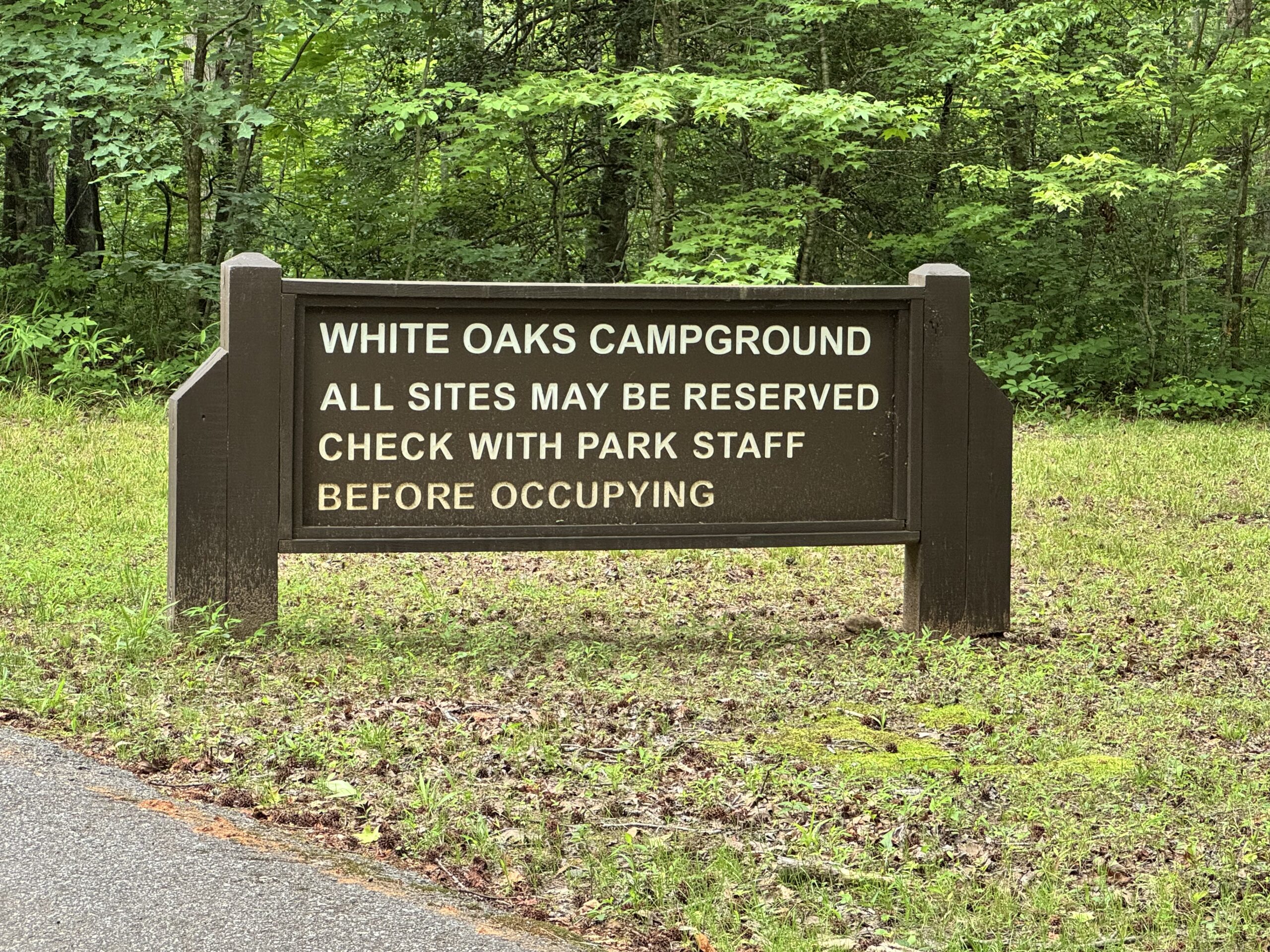
The official camping page describes 69 developed sites near the entrance and 25 near White Oaks picnic area. Some sites fit RVs up to 40 feet. Confirm your selected site’s dimensions; that maximum isn’t guaranteed campground-wide.
Start with your least flexible requirement. An RV needs a suitable pad and electrical connection. If you can’t comfortably carry gear, you need a vehicle-accessible setup. A first-time camper may value a short walk to the showers more than extra privacy. Once those needs are settled, compare the sites that actually work.
Mountain Laurel or White Oaks: which should I choose?
Use the current reservation map to compare the two developed areas and individual sites. The park lists both Mountain Laurel and White Oaks in its facilities information. Avoid assuming one area guarantees quiet or that every site is equally close to the lake. Compare the route to the bathhouse, neighboring pads, equipment limits, and parking. Ask staff about a particular site if those details will decide your trip.
Is developed camping a good choice for a first tent trip?
It often makes the logistics easier: your equipment stays near the vehicle, and you can plan around nearby showers. You still need a weatherproof tent, comfortable sleeping insulation, lights, and a way to prepare meals. Practice setting up the tent at home. A campground hookup does not turn an untested tent or unsuitable sleeping bag into a comfortable night.
Choose an RV site by measurements
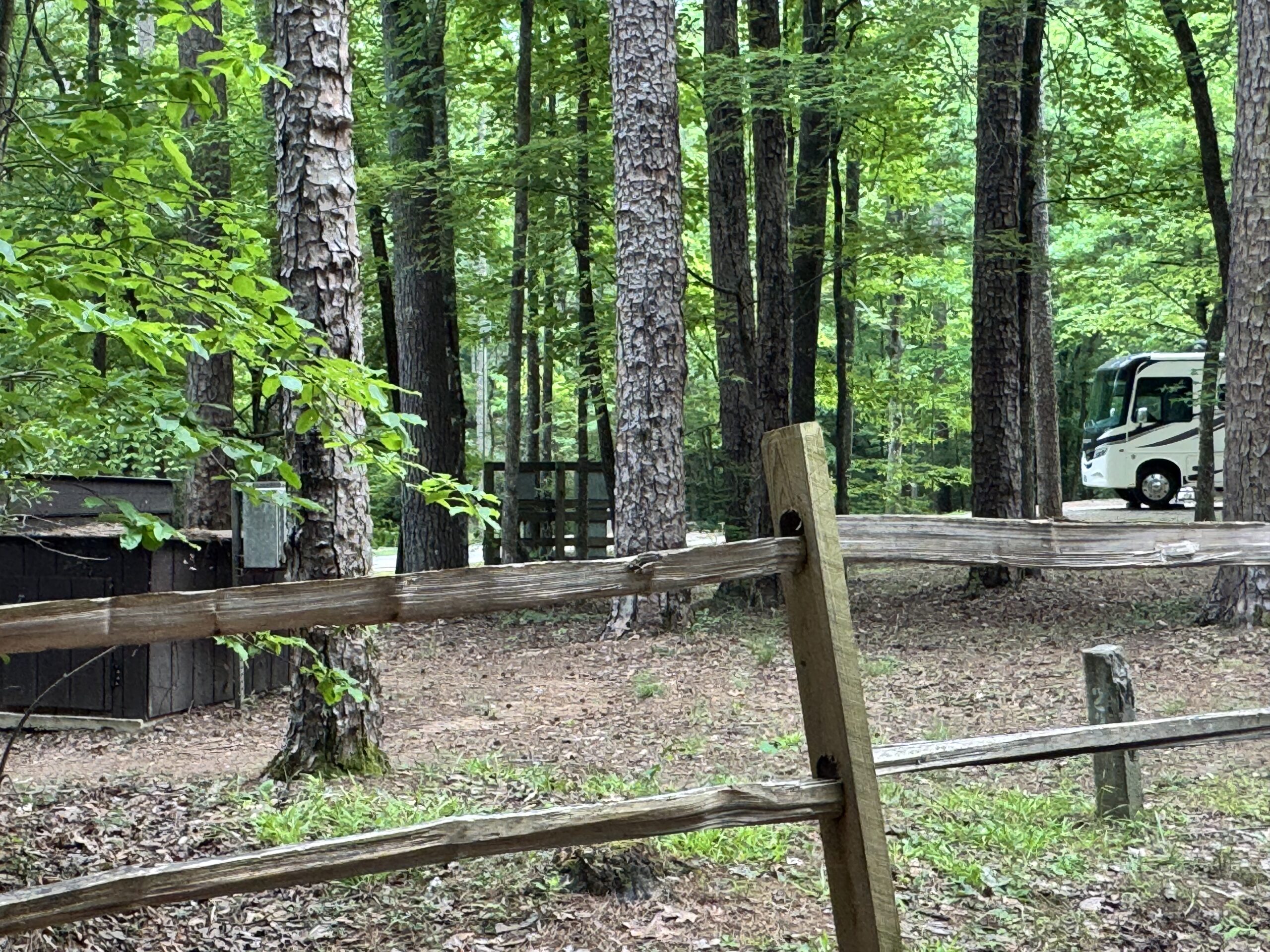
Before booking, write down your camping unit’s dimensions, electrical needs, and the space you need for slides and doors. Look at the tow vehicle too. A site length that matches the trailer alone may not solve parking, turning, or leveling. Enter accurate equipment information in the reservation system and check the individual listing before paying.
Your RV booking checklist
Length and layout: compare the pad with the whole setup and ask about approach or turning concerns. Power: verify the site’s listed service against your equipment. Water and waste: plan your fresh-water connection and tank capacity. Access: ask about any step-free route or bathroom need that matters to your party.
Does every campsite have a sewer hookup?
The park advertises water and electric sites plus a dump station. Those are different services. Confirm any site-level sewer connection explicitly before relying on it. Plan tank use around the facilities in your actual reservation, and use designated disposal points for wastewater. Keep hoses and the equipment you need for departure accessible while packing.
Can I pick a specific “best” campsite from a photograph?
A photograph can help you understand a setting, but it may not show slope, pad length, neighboring units, or the route to the showers. Use the site number and current reservation details. When privacy, shade, or mobility access is essential, ask staff a specific question about the exact site rather than treating an old visit photo as a specification.
Pine Point and primitive group camping
For Pine Point, the published 880-yard approach equals half a mile. Think of that as a gear-carrying trip: the tent, cooler, bedding, water containers, and everything you bring must be manageable on the walk. Group areas include Fox Hill, Owl Tree, and Bobcat Creek. Use the park’s camping page and call directly to arrange primitive camping.
Primitive does not mean spontaneous. Decide how you will cook, wash your hands, handle trash, stay dry, and carry supplies back out. Keep gear in a few manageable loads rather than a collection of loose bags. Before you finalize the plan, ask where drinking water and the available toilet facilities are relative to your assigned site.
Should I bring a heavy cooler to a walk-in campsite?
Only if you have a realistic way to carry it along the approach. Build meals around the equipment your group can move comfortably. A smaller food load and simple menu can make arrival much easier. Ask staff about the route before relying on a wagon; the published walking distance doesn’t guarantee wheels will work on every part of the path.
Can I pitch a tent along a hiking trail inside Table Rock?
No. Camping is prohibited within the park trail system. Backpacking the Foothills Trail outside the boundary is a separate trip. The park identifies the change from yellow-and-white blazes to white-only blazes for that route and requires an overnight parking permit. Consult the official trail guidance and Foothills Trail Conservancy before planning a backpacking itinerary.
Reservations, costs, and check-in
Book through the South Carolina State Parks reservation system or call 1-866-345-7275. Reservations open up to 13 months ahead. Table Rock publishes a two-night camping minimum; check the actual dates for applicable stay requirements. Contact the park directly for a same-day request. Camping payment is due in full at the time of reservation.
Rates depend on your dates and demand, so use the dated checkout total rather than an old nightly figure. When comparing trip costs, include food, fuel, firewood, and any equipment you need to buy or rent. Review the official reservation FAQ before paying.
| Arrival detail | Plan for it |
|---|---|
| Campsite check-in | 2 p.m. |
| Campsite checkout | Noon |
| Late arrival | Arrange instructions with staff before traveling; park gates lock nightly. |
| Confirmation | Keep the reservation, site details, and directions available offline. |
What if my dates are sold out?
Try a different arrival day or a suitable site. Keep the requirements that matter—equipment fit, access, and group size—in place while searching. Do not buy a supposedly transferable reservation from another traveler; the park FAQ prohibits subletting. If you need a different kind of stay, use our overnight guide to compare cabins and nearby lodging.
What happens if I need to cancel?
The published campsite cancellation schedule is: 60+ days out, no cancellation charge; 15–59 days out, a $10 administrative fee; 4–14 days out, the first night; and 3 days or less, no refund. Review the current terms at booking, including transaction fees, date changes, and early departure. Save the policy with your confirmation rather than relying on a rainy forecast to qualify for a refund.
Pack for sleeping, cooking, and wet weather
Packing by task is easier than packing by impulse. Set aside the sleep kit first, then the cooking kit, then the things you need within reach when you arrive. Keep bedding dry during the drive and avoid unloading it onto wet ground. Put the tent and its setup tools where you can reach them before you open the rest of the vehicle.
| Task | Useful items |
|---|---|
| Shelter and sleep | Tested tent and rainfly, correctly sized ground protection, sleeping bag, insulated pad, dry sleep clothes. |
| Meals and cleanup | Simple menu, suitable stove, fuel, cookware, cooler as needed, dishwashing supplies, secured trash bags. |
| After dark | Headlamps, spare power, extra layer, comfortable footwear, medications. |
| Weather and outings | Rain layers, water bottles, trail snacks, sun protection, first-aid kit, downloaded map and directions. |
As an Amazon Associate I earn from qualifying purchases.
A fold-up Therm-a-Rest Z Lite Original foam pad (Amazon paid link) needs no inflation, but its slim foam feel will not suit every sleeper; check comfort and insulation for your season before choosing it. For hands-free trips to the bathhouse, a Petzl TIKKA headlamp (Amazon paid link) is easier to carry than holding a phone. Test your sleep setup and lights before packing the car.
How do I keep a rainy weekend manageable?
Test the rainfly before the trip, keep sleeping gear protected, and pack a separate dry set of clothes. Plan meals you can make safely with your setup. Use a stove only as its manufacturer directs, outdoors and clear of shelter; do not cook inside a tent. Check the forecast before choosing your hikes and have an alternative for a wet afternoon.
Can I rely on Wi-Fi for work?
The park lists complimentary Wi-Fi in Mountain Laurel and White Oaks campgrounds. That does not establish the connection quality at your pad on your travel dates. Download maps and confirmations, and ask about service if you have a fixed work commitment. Keep essential trip information usable without a connection.
Campfires, pets, and considerate camping
Fires must stay in designated areas. Check current restrictions before lighting one and buy firewood locally. Have a dinner that works without an open fire. Keep the campsite clean, dispose of wastewater at designated facilities, and leave trees and other natural features undisturbed. The campground rules also prohibit parking beside roads or on empty sites.
How many tents and people can share a site?
Statewide rules allow one RV or trailer plus one tent, or two tents. The usual occupancy limit is six people, with a single-family exception described in policy. Discuss a larger family with staff before booking. Any extra vehicle, tent, or visitor must still fit the park’s arrangements; an unoccupied neighboring pad is not overflow space.
Can I bring my dog?
Pets must remain leashed, with a maximum six-foot leash. Bring cleanup bags and arrange a plan for every outing so your dog is cared for throughout the stay. Pets are not allowed on the swim beach or in indoor areas. Consider how your dog handles neighboring campers, passing walkers, heat, and being in an unfamiliar place at night.
What about quiet hours, generators, and visitors?
Ask staff for the posted quiet hours and any generator restrictions that apply to your reservation. Keep music, lights, and conversation considerate even before quiet hours begin. Day visitors who are not registered overnight must pay park admission. Ask about parking and guest arrangements before inviting another household to spend the evening at your site.
Food storage is part of the camping routine. Ask staff about current wildlife precautions, secure food, trash, and scented items, and clean up after cooking. Never feed wildlife. Read our South Carolina mountain bear-safety guide before the trip, and make sure everyone in your party follows the same storage plan.
Plan your day around the right trail or lake
A campsite gives you a place to return to; it does not make every nearby outing easy. The Lakeside Trail is an easy 1.9-mile loop around Pinnacle Lake. Carrick Creek is a two-mile moderate loop. Table Rock Trail is very strenuous at 3.6 miles each way. Choose a route for the whole group and allow enough time to finish before sunset. Our Table Rock trail guide helps compare the routes.
Is Carrick Creek Falls the same outing as the full loop?
No. The waterfall near the trail’s beginning and the full two-mile loop involve different amounts of walking. The current access construction also changes how hikers reach the trail. Follow the advisory and posted directions. Do not describe the entire loop as an easy waterfall stroll or assume normal deck access during the project.
Which lake has rental boats and swimming?
Park boat rentals are for Pinnacle Lake. Lake Oolenoy has a ramp for private paddle-powered boats and boats using electric trolling motors; gas motors are prohibited. Plan swimming around the designated Pinnacle Lake swimming area and confirm seasonal access with staff. Swimming from park boats is prohibited. Rentals depend on weather and availability. See the official activity page before bringing or renting a boat.
Both lakes offer fishing. Confirm your license requirements and current rules before casting; our Upstate mountain fishing guide can help you plan the fishing portion of the trip. Keep the boat, fishing, and hiking plans realistic for the time you actually have.


A relaxed two-night camping plan
Arrival afternoon: establish camp
Check in, find your site, and get shelter ready while it’s still light out. Locate the bathhouse and learn your return route before you head out. Keep the first dinner simple. An unhurried start leaves more energy for the following day than trying to fit a summit hike between arrival and bedtime.
Full day: one main outing
Choose a trail, lake outing, or foothills drive as the main event. Leave space for lunch and rest. If the weather or the group’s energy changes, use 15 experiences near Table Rock beyond hiking to find another direction for the day.
Departure morning: pack before the next adventure
Have breakfast, clean the site, and pack for noon checkout. Leave time to handle your RV tanks at the designated facility if needed. If you want another day-use outing afterward, ask staff how parking and admission apply once your overnight stay ends.
For a meal away from camp, read about Pumpkintown General Store & Café and Aunt Sue’s Country Corner. Check their current hours before leaving your site. Bring breakfast supplies and a backup dinner so an unexpected closure does not complicate the evening.
The best camping plan leaves room to breathe.
Choose a site that fits, bring equipment you know how to use, and resist filling every hour. A dry bed, an easy meal, and a mountain morning can be plenty. Table Rock offers the setting; a manageable plan gives you time to enjoy it.
Official planning sources
Checked October 10, 2026: park advisory · camping facilities · reservation FAQ · campground rules · trail information · lake and activity information. Recheck advisories, site details, and booking terms for your travel dates.


