
Exploring the Clemson Botanical Garden: Clemson’s Hidden Gem
CLEMSON, SOUTH CAROLINA • GARDENS • HISTORY • FAMILY OUTINGS
Take the slower road through Clemson.
Woodland paths, changing flowers, a geology museum, and a garden that brings South Carolina’s habitats into one place. The South Carolina Botanical Garden rewards a little curiosity—and a visit with room to wander.
The South Carolina Botanical Garden in Clemson offers a different kind of Clemson day. You can follow a shaded path, study a pitcher plant’s shape, watch a turtle near the water, or step into a museum filled with minerals and fossils. It’s a great destination for visitors looking for something beyond stadiums and campus landmarks, and an equally useful place for locals to return to through the seasons.
Often called the Clemson Botanical Garden, it is part of Clemson University. The official garden name matters when looking up maps, events, and visitor information. The main grounds are free, so you can try a short visit first and return for the sections that catch your attention.
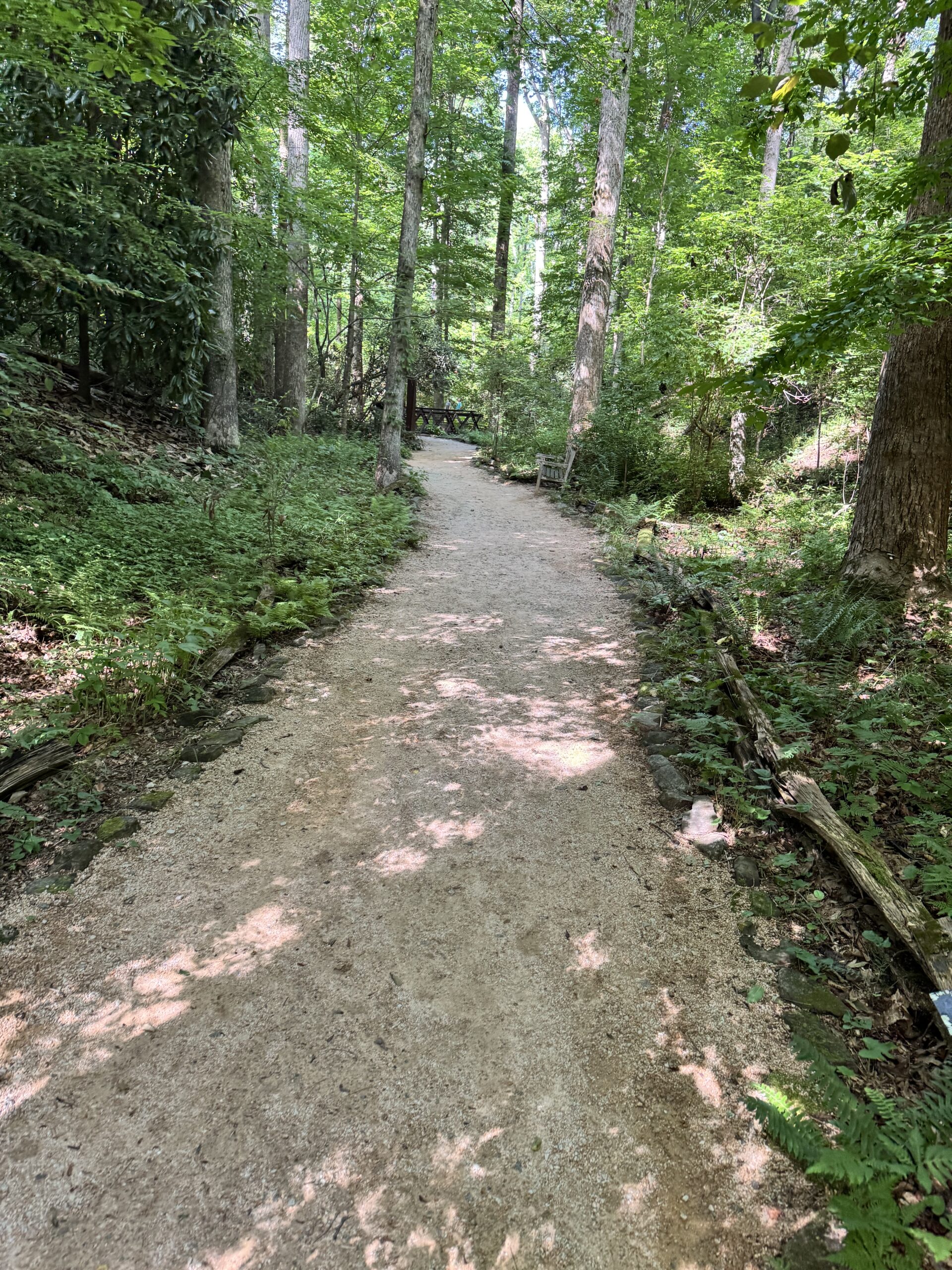
Plan your visit at a glance
| Detail | What to know |
|---|---|
| Official name | South Carolina Botanical Garden |
| Address | 150 Discovery Lane, Clemson, SC 29634 |
| Garden grounds | Free; sunrise to sunset, daily |
| Visitor’s center | 10 a.m.–5 p.m.; university and seasonal holiday closures |
| Bob Campbell Geology Museum | Free; 10 a.m.–5 p.m.; closed university holidays |
| Garden contact | 864-656-3405 |
| Map | Official garden map and wayfinding |
| Suggested time | About 1–2 hours for a first visit; longer if adding museum or house tours |
The time allowance is a planning suggestion, not a measured trail duration. The garden visitor page and museum website provide current building information. Outdoor opening hours do not mean every indoor attraction is open. Check before traveling on a holiday or planning a visit around a particular building.
Start with a map, then choose your interests
A garden visit does not need to cover everything. Pick two or three priorities: native habitats, flowers, the museum, history, or a quiet walk. Save the official map before arrival and use marked routes to connect your stops. If walking distance is a concern, ask staff which parking area best serves the places you want to see.
How a camellia preserve became the state garden
Clemson’s garden history begins in 1958, when a small camellia preserve was established beside the Fort Hill estate. It was designated South Carolina’s state botanical garden in 1992. Those two dates describe its origin and its later statewide identity.
That beginning helps explain a place that combines cultivated collections with woodland. You can enjoy an individual bloom, but you can also look at how plants fit a setting: beneath trees, beside water, or in a landscape designed to represent a particular habitat. A botanical garden is a useful place to move from “What is that flower?” to “What conditions allow it to grow here?”
The current main website and history page describe 230 acres. Other Clemson material and tourism listings still use roughly 295 or 300 acres. For planning, think of it as a large garden with several distinct areas rather than a single flower display. The map is more useful than the acreage for deciding what you can comfortably explore.
The Natural Heritage Garden: a different way to see South Carolina
The Natural Heritage Garden is one of the strongest reasons to visit. Its exhibits bring together representations of habitats that would normally require travel across the state: maritime forest, longleaf pine savanna, wetlands, Piedmont settings, and mountain environments. This is a planted, interpreted landscape, rather than a claim that every habitat occurs naturally at this Clemson site.
Walk it as a sequence of questions. How does the ground change? Which plants form a canopy, and which stay close to the soil? Where does water appear to shape the scene? The labels can give you names, but the arrangement helps explain relationships. For someone familiar mainly with the Upstate, the coastal and wetland exhibits can be particularly interesting.
Carnivorous plants provide a good starting point for children and adults alike. The garden describes how they supplement nutrients by trapping insects in poor-soil environments. Look closely at the plant forms without touching or feeding them. Careful observation teaches more than trying to make a plant perform on demand.
The shell-ring exhibit also connects ecology and human history. It represents the influence of Indigenous shell deposits on Lowcountry plant communities; it is an interpretive exhibit, not a newly discovered ancient shell ring in Clemson. The distinction lets visitors appreciate the teaching purpose without confusing a reconstructed setting with an archaeological site.
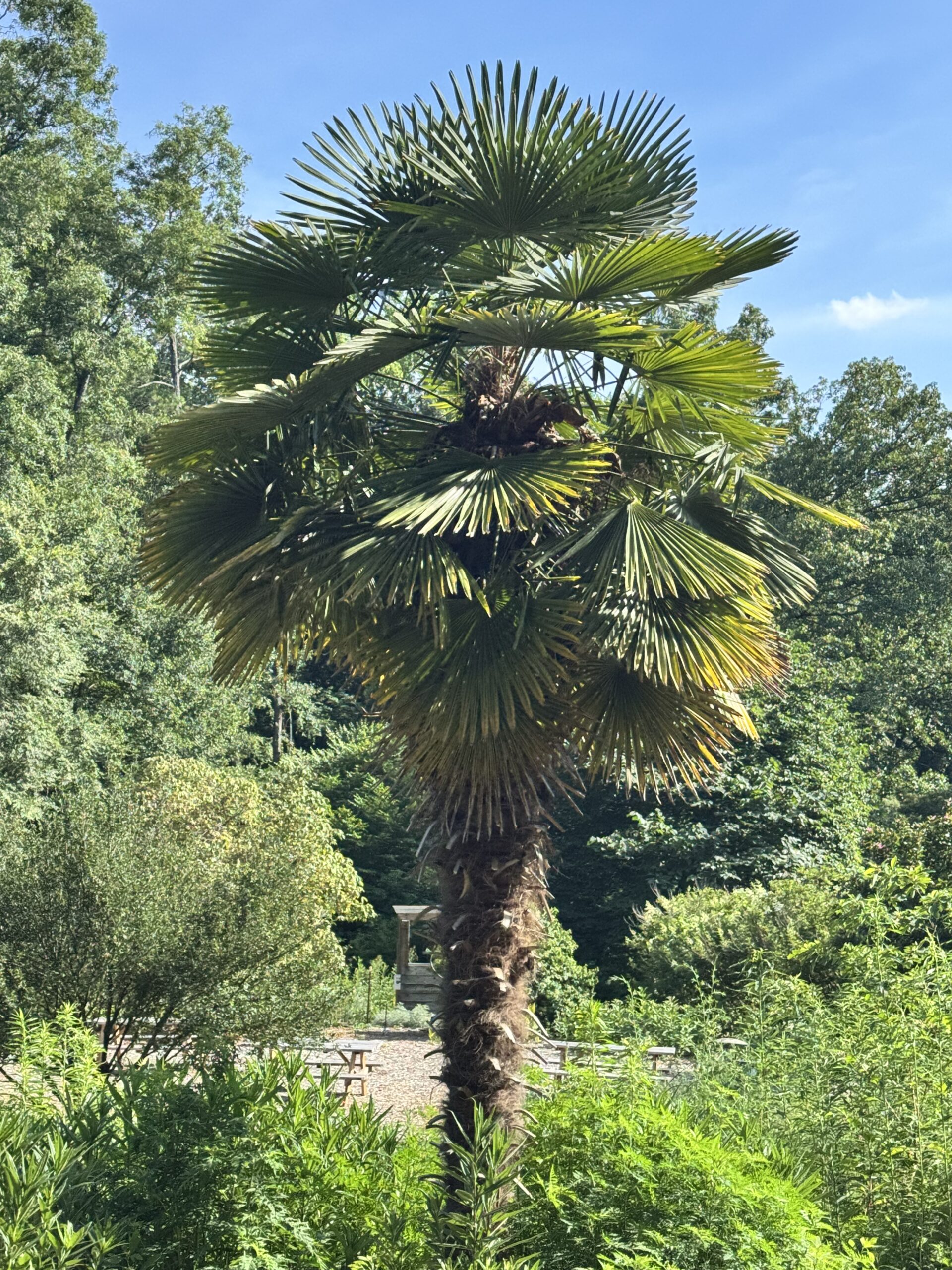
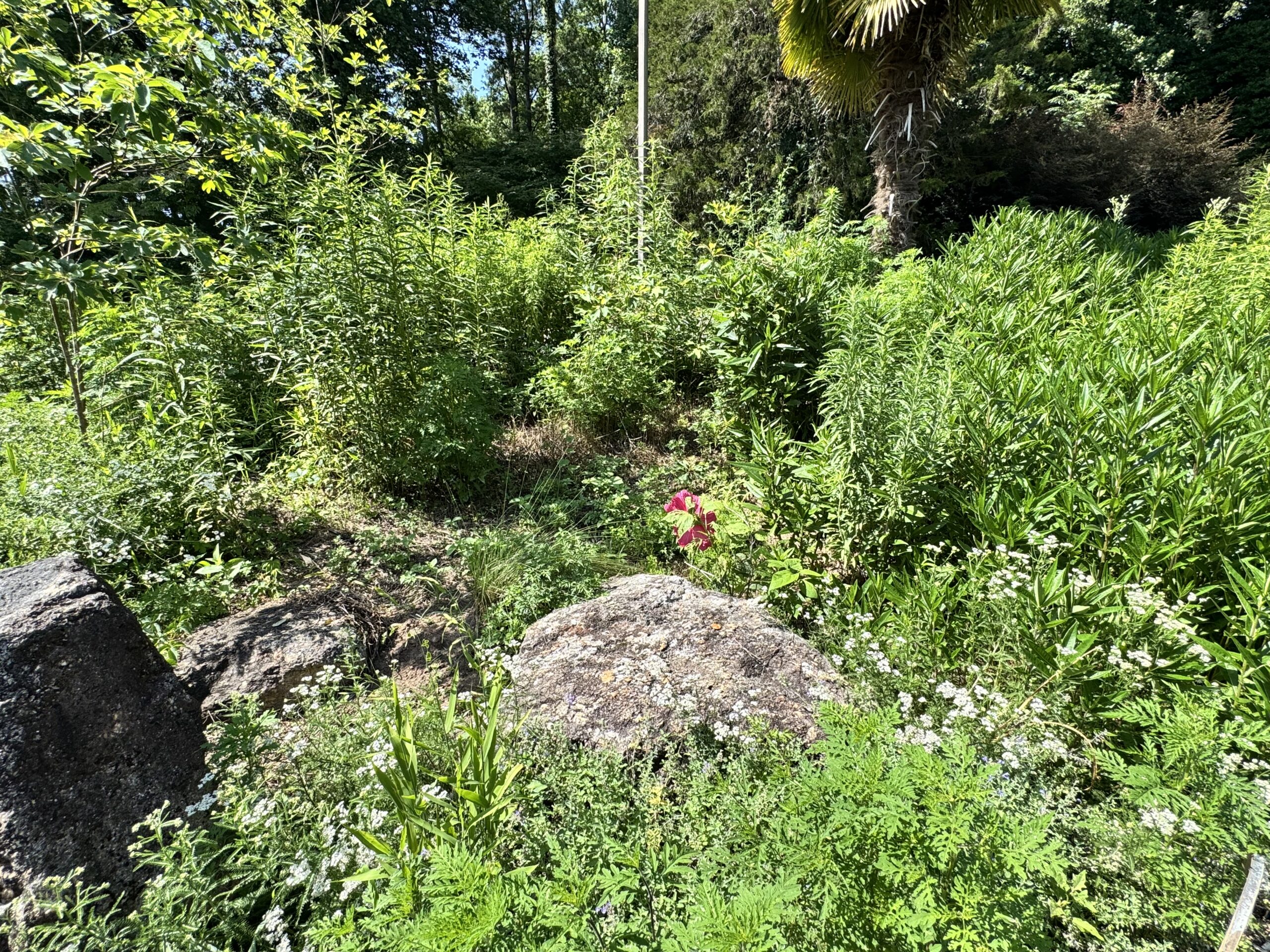
Flowers and specialty gardens worth slowing down for
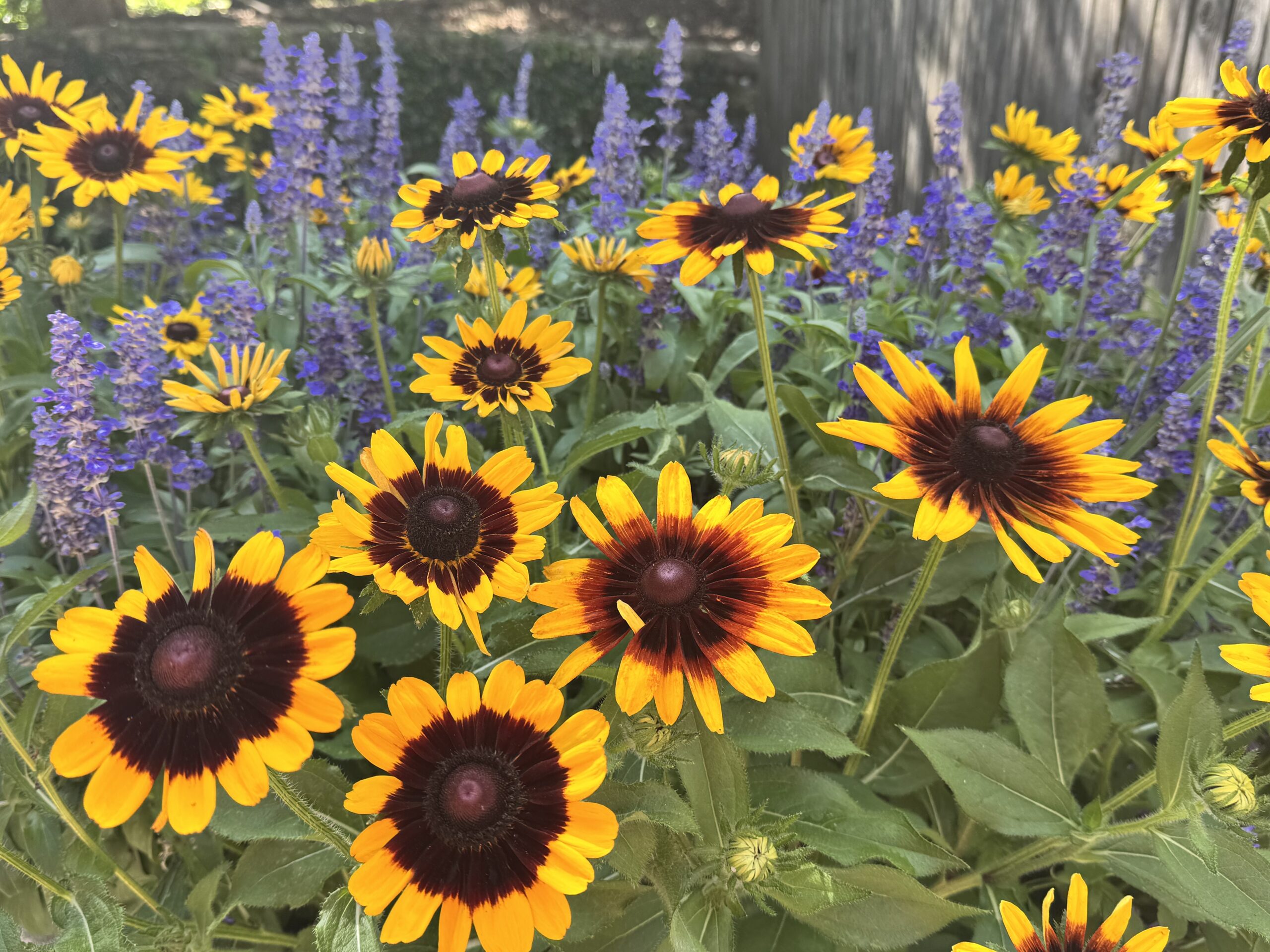
The official map identifies areas including the Camellia, Hosta, Hydrangea, Butterfly, and Desert gardens. Choose a few that fit the season and your interests. Someone looking for ideas for a shaded yard might spend more time among hostas; a visitor drawn to texture and unusual forms may prefer the Desert Garden.
Rather than racing from label to label, choose one detail to notice: leaf shape, the way flowers cluster, or the difference between a plant in sun and one under cover. Photograph labels along with plants you want to research later. A beautiful specimen can be a useful starting point for a home garden idea, but its growing requirements still need to match your site.
The garden’s research and conservation page describes its role in the Magnolia Multisite Plant Collections Network and its work with the Clemson University Herbarium. The collections support learning, documentation, and public enjoyment. That gives the grounds a purpose beyond being an attractive backdrop for photographs.
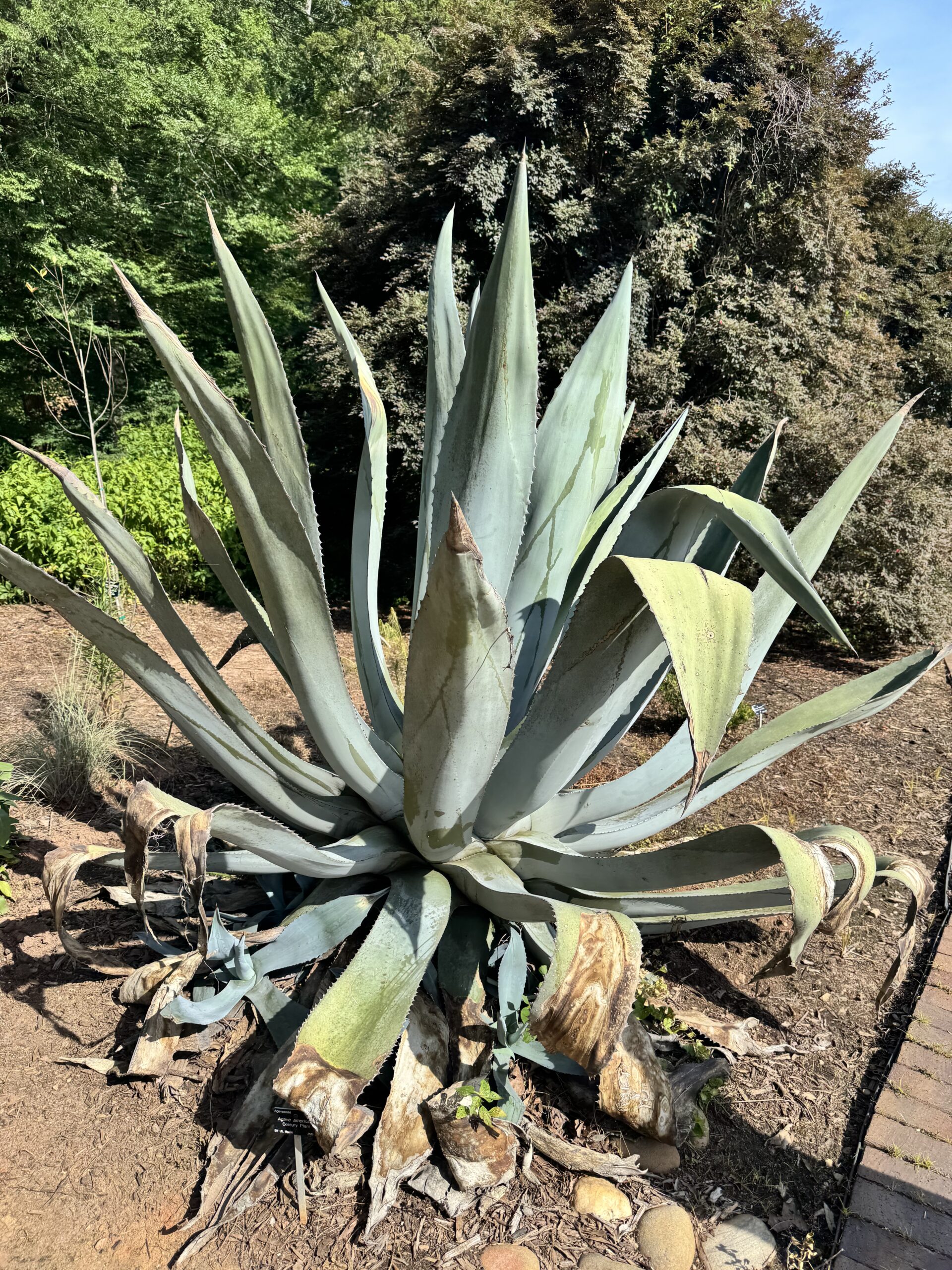
Woodland paths, ponds, and time to watch
There is room here for a walk without making the outing a major hike. Use the map to choose a route, including your return to the car. Surface, slope, steps, and weather can change what feels manageable. A shaded path can still have uneven footing, and a garden’s overall family appeal doesn’t mean every section is suitable for every visitor.
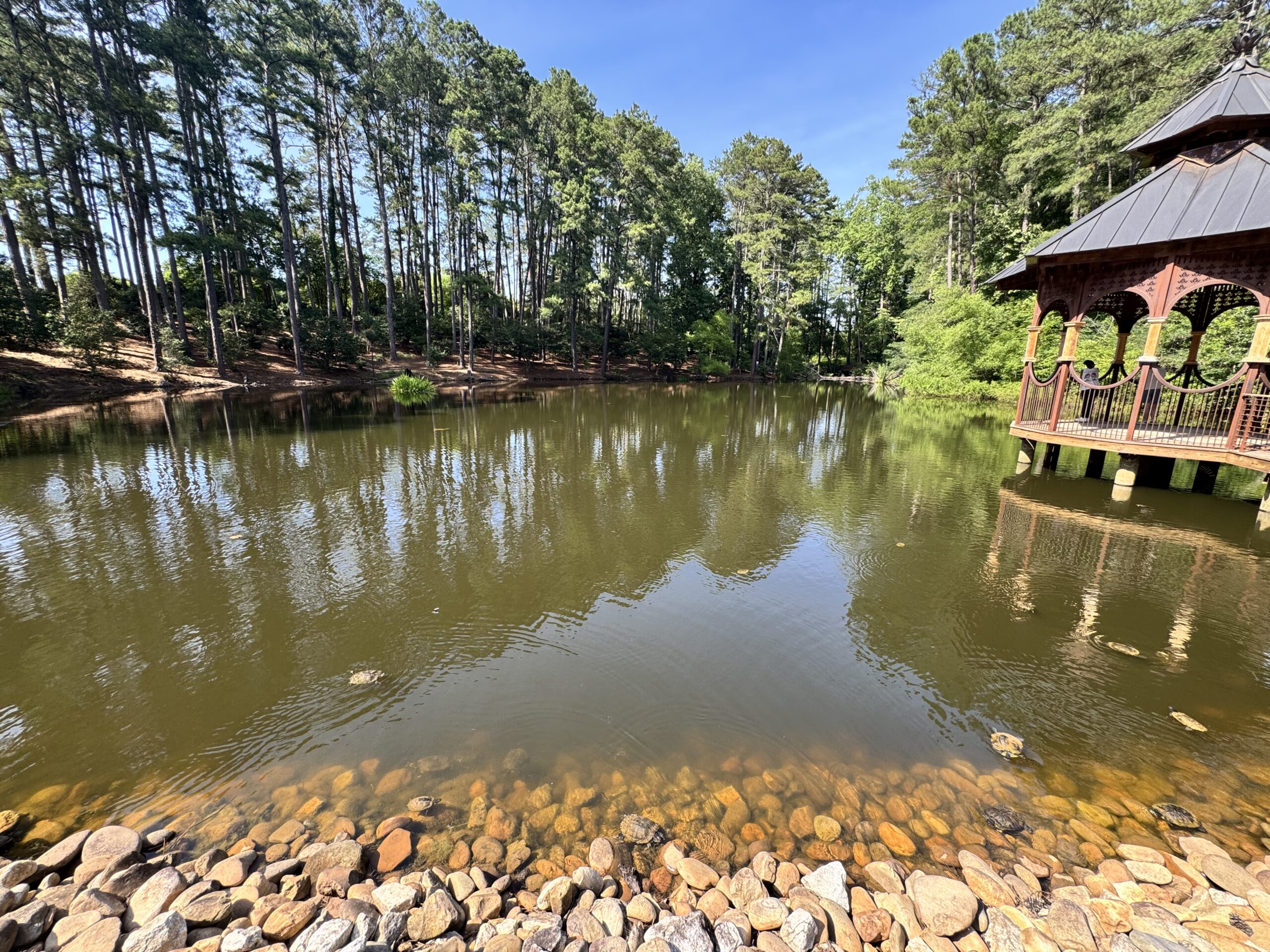
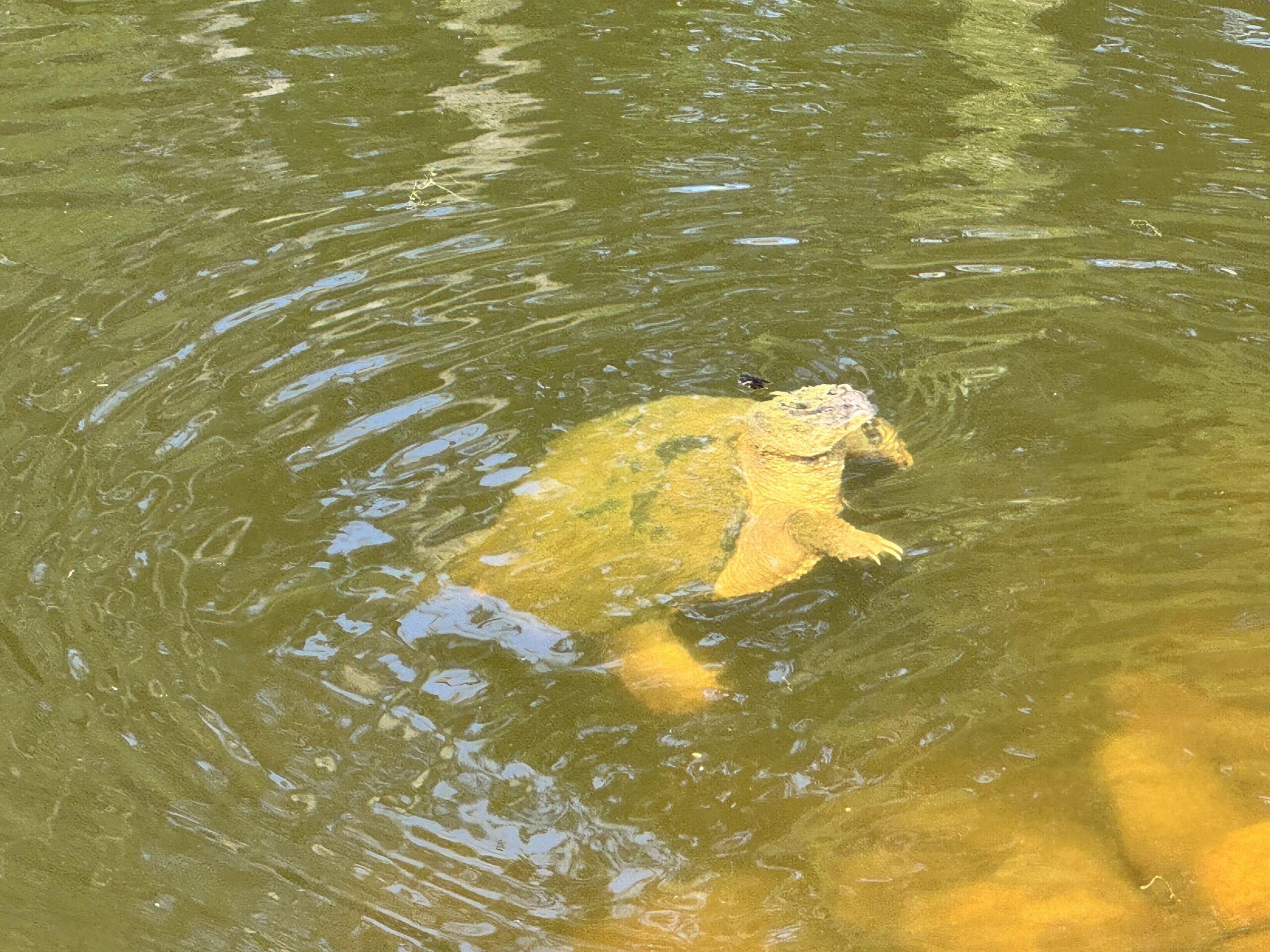
The ponds offer a different pace. Sit or stand quietly and watch what is happening before reaching for the camera. A turtle may surface, a bird may move through the branches, or the most interesting thing may be the changing reflection on the water. Wildlife sightings are possible, not a scheduled attraction.
Bring binoculars if you enjoy looking closely from a distance. For children, try a small observation challenge: find a leaf with an unusual edge, a reflection, and a living creature without disturbing any of them. Keep the challenge flexible enough that the outing remains enjoyable even when the wildlife is out of sight.
Art in the landscape—and the stone dome
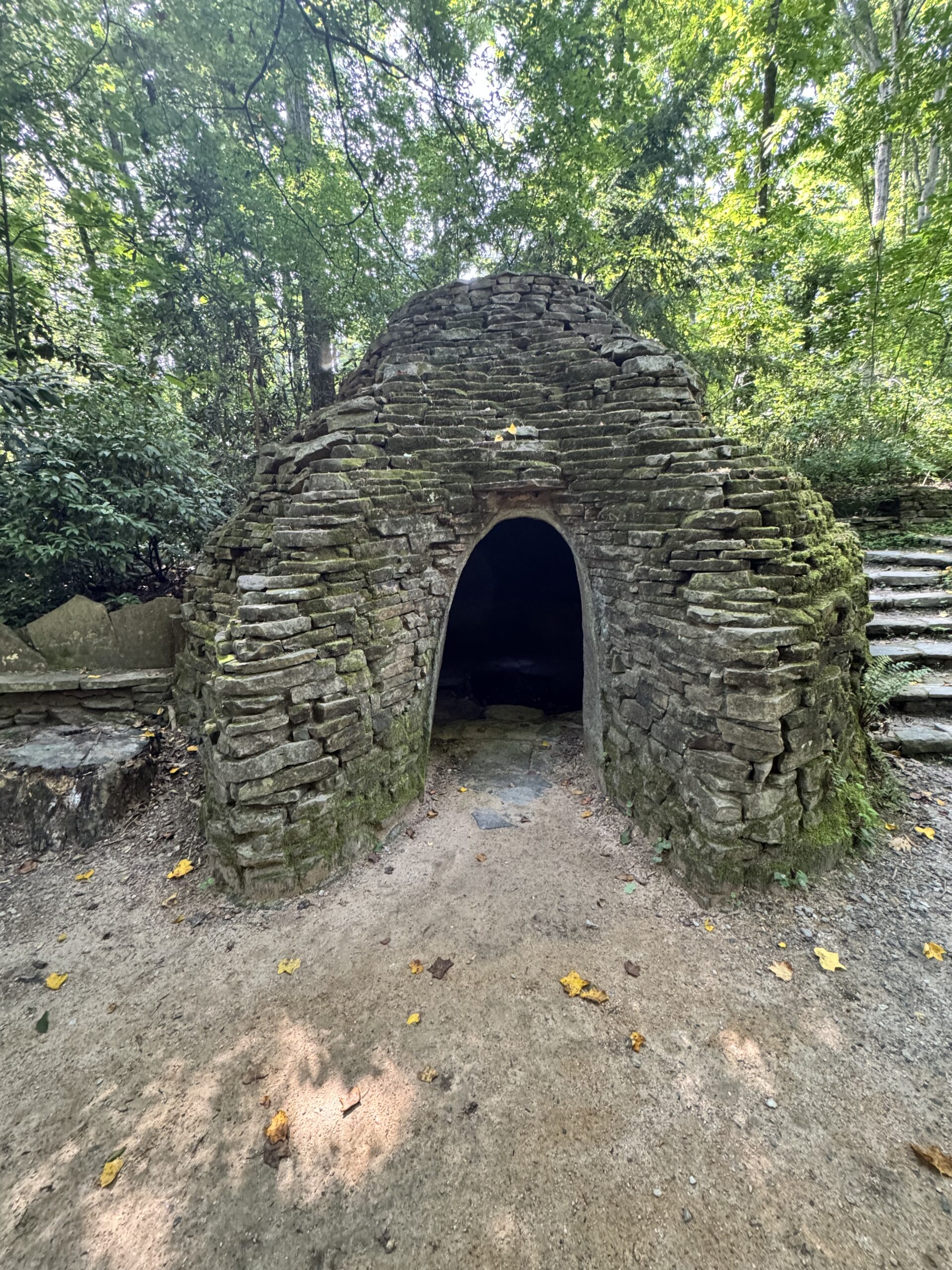
Clemson’s history page describes a nature-based sculpture program whose works used natural materials and living plants. They were intended to change through growth and decay; some have disappeared. An old photograph of an installation therefore does not establish what remains today.
The stone dome pictured above belongs in this discussion of landscape art. It is sometimes called a historic springhouse, but the records do not support that use. Enjoy the stonework as a feature of the garden without assigning it an invented frontier history. Read current on-site interpretation for the identity and context of individual works.
The caboose and Clemson’s remembered history
The garden’s history records that Southern Railway donated retired caboose SOU-X-3164 in 1972. Marguerite “Reet” Senn received it and gave it to the garden on behalf of Clemson’s Class of 1939. The donation helped begin garden spaces devoted to university history.
That specific story is more interesting than treating the caboose as a decorative railroad prop. It represents people choosing what to preserve and how to share it with later visitors. View it as an outdoor historical feature; do not assume it is open inside or available as climbing equipment.
Hunt Cabin: a fuller account of the past
The current garden history page identifies Hunt Cabin as a nineteenth-century Seneca-area residence, built by enslaved people and moved to the garden in the mid-1960s. It says the cabin generally stays closed, with occasional programs. The site’s historical summaries differ on its precise date and family attribution, so “late 1700s frontier cabin” is not a reliable description.
A log building can easily become a simplified picture of pioneer life. A fuller reading asks who owned the property, who built the house, and whose labor supported the household. Those questions add depth to a visit. Check the garden event listings for a program if you want access and interpretation beyond viewing the exterior.
Hanover House: Lowcountry history moved to Clemson
Hanover House adds another historical layer. Clemson dates the Berkeley County house to 1716 and describes it as likely built by enslaved African laborers for French Huguenot Paul de St. Julien. Threatened by the creation of Lake Moultrie, it was moved to Clemson in the 1940s, then relocated to the botanical garden in 1994.
Its story connects the Upstate with Lowcountry plantation history, architecture, slavery, and preservation. The house was not originally part of this Clemson landscape. That makes it a useful place to consider how a museum building carries a story from one location into another, and what interpretation is needed to keep that story clear.
Interior visits follow a separate schedule. Clemson currently lists Monday–Saturday hours of 10 a.m.–noon and 1–4:30 p.m., with Sunday hours of 2–4:30 p.m. The museum may close on university holidays, during home football games, and on other exceptions. Confirm with Historic Properties at 864-656-2241. Suggested donations are $5 for adults, $4 for seniors, and $2 for children.
Do not skip the Bob Campbell Geology Museum
The Bob Campbell Geology Museum changes the scale of the outing—from living plants to the minerals, rocks, and fossils that help tell Earth’s history. The university describes a collection of more than 10,000 specimens. It is a strong addition for curious children, rock enthusiasts, and anyone who likes a visit with more than one subject to explore.
Its origins have a personal story. Betty Newton cared for a geology collection in Brackett Hall and advocated for a public display. Donations helped it grow; Bob and Betsy Campbell committed support for a museum building in 1996. The museum opened publicly in October 1998, after being dedicated in September 1998.
Choose a few exhibits to examine closely instead of trying to remember every label. Ask a child which object looks most surprising and what they think it might tell us. For adults, the museum offers a useful connection back to the garden: a landscape has a geological history as well as a botanical one.
What to look for through the seasons
The garden’s seasonal highlights give more useful guidance than a promise of flowers everywhere. Weather affects bloom timing; use these examples as possibilities, and check the garden’s current updates before traveling for a specific plant.
| Season | Examples listed by the garden | A good way to visit |
|---|---|---|
| Winter | Camellias, including cultivars flowering from December into February | Look for blooms, evergreen texture, and the shape of bare branches. |
| Spring | Oconee bells and bloodroot in March; Carolina jessamine in April | Take time with smaller flowers and photograph their labels. |
| Summer | Cup plant in July–August; orange-fringed orchid in August | Choose a comfortable part of the day and allow water breaks. |
| Fall | Climbing aster in September–October; mountain marigold in October | Notice seed heads, texture, and color as well as open flowers. |
Three ways to plan your first visit
About an hour: a short introduction
Choose one garden area near your selected parking location, and allow time to return without rushing. If the visitor’s center is open, start with a map and ask what is interesting that day. Save the museum and distant sections for another visit.
About two hours: plants plus the museum
Build the visit around a manageable garden walk and time inside the geology museum during its opening hours. This pairing works well when group members have different interests. Shorten the walk if you want to read exhibits carefully.
A longer visit: habitats, history, and a picnic
Choose the Natural Heritage Garden, a museum visit, and Hanover House if its tour schedule fits. Use a designated picnic area for a break. Treat this as a selection of stops linked by the official map, not a fixed measured loop or a promise to see everything.
Visitor questions and practical details
Is the Clemson Botanical Garden the same as the South Carolina Botanical Garden?
Yes. South Carolina Botanical Garden is the official name. Use that name to find current maps, programs, and contact information.
Is it free?
The garden grounds and the geology museum are free to enter. Hanover House suggests a donation; organized programs may charge separately. Check the listing for an activity you plan to book.
Can I bring a dog?
Leashed dogs are welcome on permitted trails, but not the Natural Heritage Garden Trail or inside university buildings. Clean up after your pet, and keep them out of planting beds. Choose your route accordingly.
Is the whole garden wheelchair- or stroller-accessible?
Do not assume every woodland route is suitable. Ask garden staff about surfaces, grades, steps, and parking for your intended stops. A shorter route can still make a rewarding outing.
Can I bring a picnic or ride a bicycle?
Please keep food and drinks in designated picnic areas. Bicycles are allowed only on paved surfaces. Skateboards and rollerblades are prohibited. The garden is a place to share with walkers, so please be considerate.
Where should I park and find restrooms?
Use designated parking and the restroom locations on the official map. Do not park on turf or in planted areas. Choose parking for the stops you intend to visit, and check building access when planning a restroom break.
Can I take portraits or professional photographs?
Professional photographers and videographers must register with the garden in advance. A public visit does not reserve a location for a shoot. Check the official visitor page before scheduling clients or arranging a session.
Are tours and children’s activities available?
Use the current garden events and education pages to find offerings and registration details. Book the specific program you want rather than assuming a guide, cabin opening, or children’s activity is available on arrival.
Make it part of a Clemson or Upstate outing
For a longer Clemson stay, our Clemson hotel and Airbnb guide can help you choose a base. If you want more movement on another day, compare options in our Clemson running guide. Keep a garden visit at the pace that suits everyone in your group.
History-minded travelers can continue reading with Old Stone Church in Clemson or plan a separate outing to Hagood Mill near Pickens. Our Lake Keowee history feature explores another regional story of changing landscapes and preservation. These make useful companion reads without turning one garden afternoon into an overloaded itinerary.
The garden’s appeal is the freedom to pay attention. A first visit can be small: one collection, one path, and a reason to return. With a map and a little time, Clemson’s garden becomes more than a stop between other plans—it becomes a place to learn how much a landscape can hold.
Sources and further reading
Visitor information: Clemson’s garden visitor page, maps, and Bob Campbell Geology Museum. Background: garden history, Natural Heritage Garden, seasonal highlights, and research and conservation. Historic properties: Hanover House history and tour information. Programs: garden events. Information checked October 12, 2026; check current announcements before visiting.
Visiting Clemson? Our sister site VisitClemsonSC.com has a companion Botanical Garden guide and a campus visit guide.


